
The Latvian National Federation in Canada (Latviešu Nacionālā Apvienība Kanādā) acquired its present name in 1950, but the real work began in September 1948. The organization initially began its life as the Canadian Latvian National Federation (Kanādas Latviešu Nacionālā Apvienība). This was the moment in time when the first cohort of Displaced Person labourers completed their mandated one-year contracts and were free to leave their government-mandated work sites and move on to better employment opportunities. They were also free to sponsor family members to come to Canada, although that was often financially challenging. Most earned on average $0.80–1.00 per hour, and passage across the ocean cost several hundred dollars. Workers were invited to contribute one hour of wages per month to support refugee aid.
There was an urgent need to pull together and an acute awareness of the plight of those still subsisting in dire conditions in European refugee camps. The organization also actively lobbied the Canadian government to accept more Latvian DPs, older individuals, and war veterans. There was also a need to assist fellow Latvians in dealing with unscrupulous employers and provide translation services. In addition to the challenges of daily living, community members also felt a strong commitment to continue the fight for Latvian independence and to survive as a nation in exile.
As people moved to urban areas, a variety of community organizations and publications rapidly sprang up to serve the growing community. First among them was the Imanta Latvian Society, founded in Edmonton by Konrāds Dobelis and the Latvian Relief Association, founded by Mariss Vētra and Teodors Brilts in Halifax. Both were founded in 1947 by individuals who were not Displaced Persons but felt a keen responsibility to do everything they could to help.
It was an outstanding and generous collaboration between two very different communities.
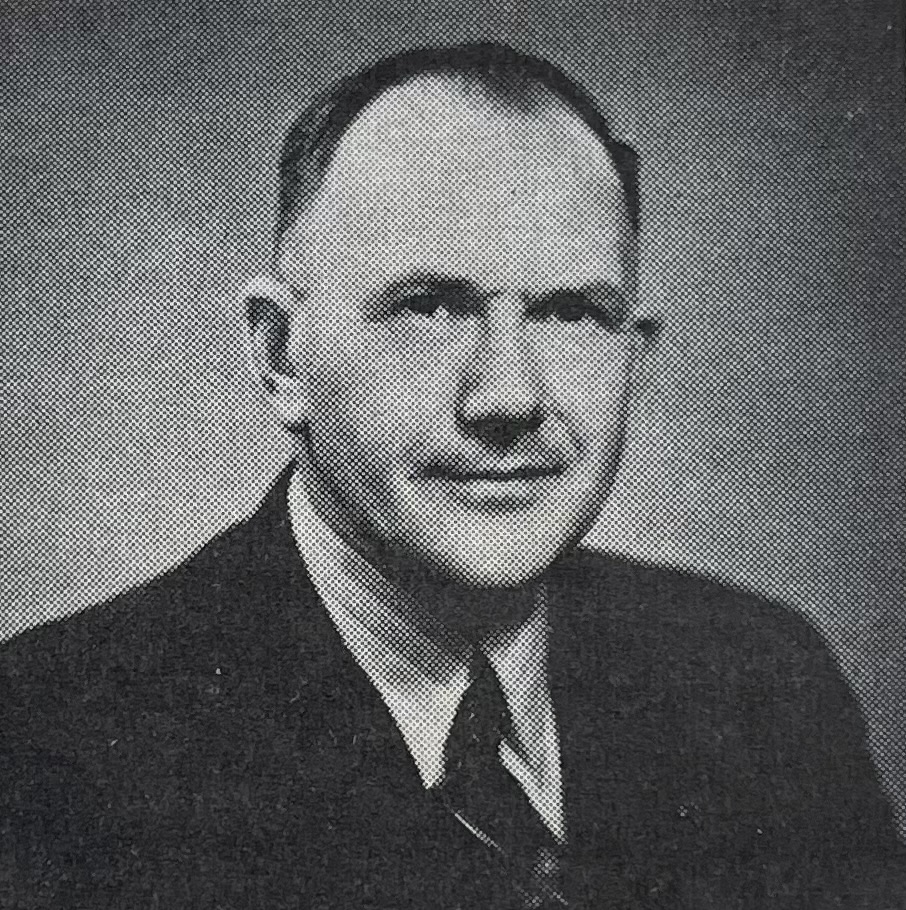
Konrāds Dobelis was Latvian by birth but had immigrated to Canada in 1927. He was known as a veclatvietis literally “an old Latvian,” the term used for those who had immigrated to Canada before World War II or a veckanādietis (old Canadian) in Latvian. He had received an engineering degree from the University of Latvia but operated a successful painting business in Edmonton. From 1947 on, his home served as a community hub for arriving labourers and local Latvians. His home also housed a newspaper (Brīvais Latvietis) that he published, the Imanta Society, and a gift shop. He spent 1945 and 1946 in government service in Europe and upon his return threw himself into helping the newcomers adjust to life in Canada. He was known for his relentless work ethic and enthusiastic support. Of all the “old Latvians,” he is said to have best understood the new arrivals. He was known for investing tremendous physical effort, money, and sleepless nights without making demands or rules.
Before the war, Mariss Vētra had been a star of the Latvian and European opera stage. In 1944, He escaped Latvia in a fishing boat with his wife and two young sons. In Sweden, he was relegated to menial work, but he sought opportunities through pre-war friends and acquaintances. It was his good fortune that the Halifax Conservatory of Music was looking to found a new opera class and decided to hire him.
Vētra and his family arrived in Halifax in January 1947 with an offer of employment in his field of expertise. It was a rare opportunity.
Mariss Vētra was a high-energy, charismatic individual who embraced both his new homeland and fellow Latvians with equal care and empathy. He became a beloved teacher at the Halifax Conservatory and developed an ambitious program to develop Canadian-born singers. He is responsible for staging the first opera presented in Canada with Canadian-born singers.
Even though he was fully tasked with implementing a new opera program, Vētra also undertook the role of aid worker. As ships carrying Latvian Displaced Persons began arriving in the summer of 1947, Vētra met each ship himself personally while Brilts took on the work of compiling a register of all arriving Latvians.
See the Halifax page for more details.